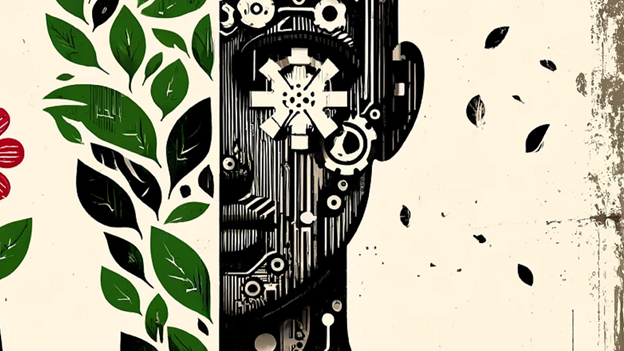

For years, organizations have approached automation with a single obsession: efficiency. Faster processes. Fewer errors. Lower costs.
But something critical was missed along the way.
Automation was never meant to replace humans — it was meant to liberate them. And yet, in many workplaces, automation has created anxiety instead of opportunity, fear instead of focus, and disengagement instead of growth.
The future of work does not belong to automation-first organizations. It belongs to those that move from automation to augmentation — where technology enhances human capability instead of erasing it.
Automation Solves Tasks. Augmentation Builds Value.
Automation answers the question: “How can this be done faster or cheaper?”
Augmentation asks a far more powerful question: “How can humans do more meaningful, impactful work?”
When AI takes over repetitive, rule-based tasks, human roles should expand upward — into judgment, creativity, problem-solving, relationship-building, and improvement.
If roles don’t evolve, anxiety fills the gap.
Redesign Roles Before Resistance Appears
One of the biggest mistakes organizations make is automating tasks while keeping roles unchanged. People then experience a silent loss of relevance — and resistance begins.
Future-fit organizations redesign roles proactively:
- from execution to exception-handling
- from reporting to insight generation
- from process-following to process-improving
- from task ownership to outcome ownership
Role clarity is the antidote to fear.
Augmentation Requires New Capabilities
Working with AI is a skill.
Employees need:
- confidence to question AI outputs
- ability to interpret insights, not just accept them
- judgment to decide when to override automation
- ethical awareness of AI limits
Augmentation succeeds when humans stay in the decision loop — not outside it.
Leaders Must Redefine Productivity
In an augmented world, productivity is no longer about volume. It’s about value.
Leaders must stop measuring success only by activity and start measuring:
- quality of decisions
- speed of learning
- customer impact
- innovation created
- problems prevented
What gets measured defines what people become.
Psychological Safety Enables Augmentation
People will only embrace augmentation when they feel safe to learn, experiment, and admit what they don’t know.
If AI mistakes are punished instead of examined, teams will avoid using it. If learning is celebrated, adoption accelerates.
Augmentation thrives in cultures where curiosity beats compliance.
Augmentation Is a Human Promise
At its core, augmentation sends a powerful message to employees: “We are investing in technology to grow you — not to replace you.”
That message builds trust. And trust is the true fuel of transformation.
Final Reflection
Automation changes systems. Augmentation changes people.
Organizations that understand this distinction won’t just adopt AI faster — they’ll create work that is more meaningful, more human, and more future-ready.
The question is no longer whether to automate. The real question is — how will you elevate humans once you do?
#FutureOfWork #AIandHuman #RightPathTransformation #PeopleTransformation #Automation